



Normal Pressure Hydrocephalus
Normal signs of aging
or NPH?
What is Normal Pressure Hydrocephalus (NPH)?
NPH is a specific form of hydrocephalus that primarily affects older people. Typical symptoms include unsteadiness, cognitive impairment, dementia and urinary incontinence, and these usually develop gradually. Forgetfulness is often mistakenly attributed to Alzheimer's disease and gait disturbance to Parkinson's disease. However, if detected early, NPH is treatable: symptoms can be significantly improved by implanting a drainage system (shunt).
Studies show that approximately 3.7% of people over 65 and around 9% of people over 80 are affected.1 Nevertheless, NPH is frequently misdiagnosed, and each missed diagnosis represents an opportunity for treatment and a better quality of life that is lost.2


Symptoms
The typical symptoms of normal pressure hydrocephalus are known as Hakim's triad:
gait disturbance, cognitive impairment/dementia, urinary incontinence.
The severity of these symptoms can vary greatly from person to person and they are often mistaken for the typical signs of ageing. If NPH is suspected, specific neurological examinations should therefore be carried out.
Diagnosis NPH
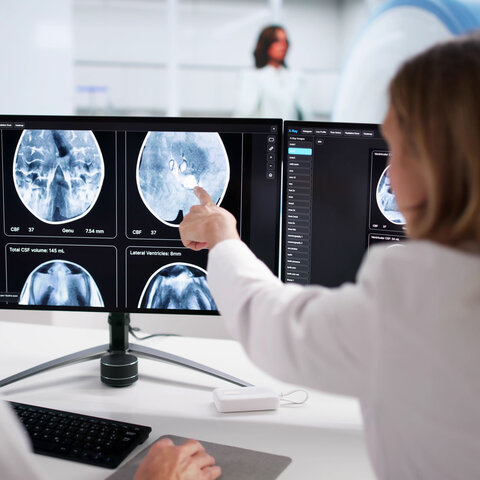
Various diagnostic procedures are used to diagnose normal pressure hydrocephalus (NPH). In addition to imaging techniques such as MRI and CT scans, functional tests such as the spinal tap test are often used.
An accurate diagnosis is crucial because NPH symptoms are often mistaken for Alzheimer's disease or other forms of dementia.


Treatment
Unlike Alzheimer's disease or other forms of dementia, normal pressure hydrocephalus can be effectively treated. This typically involves the implantation of a shunt, which is a drainage system that regulates and drains excess cerebrospinal fluid. Many patients experience significant improvement in their symptoms.3
Valve Technology
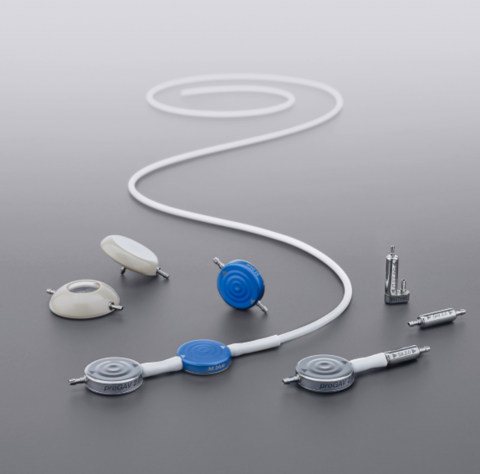
Patients with NPH usually have a shunt implanted to treat the condition. Gravitational valves control the amount of cerebrospinal fluid drained. They provide a reliable treatment option and can help to improve quality of life.4


We Understand the Gravity of the Situation
We believe that responsibility, precision and empathy are all connected. This belief is the reason behind every technical solution we develop. This attitude is reflected in our work every single day.
We develop innovative solutions for people with hydrocephalus, based on our deep understanding of the challenges they face and the requirements of clinical care. Through close partnerships with physicians and the use of precise gravitational technology, we are striving to make treatment safer, more reliable and more successful in the long term.
Our Strong Partner in Neurosurgery:

References
1. Andersson J, Rosell M, Kockum K, et al. Prevalence of idiopathic normal pressure hydrocephalus: A prospective, population-based study. (2019) PLoS ONE 14 (5): e0217705. https://doi.org/10.1371/journal.pone.0217705
2. Petrella G, Ciarlo S, Elia S, et al. A. Idiopathic Normal Pressure Hydrocephalus: The Real Social and Economic Burden of a Possibly Enormous Underdiagnosis Problem. (2023) Tomography, 9, 2006–2015. https://doi.org/10.3390/tomography9060157
3. Luciano MG, Williams MA, Hamilton MG, et al. PENS Trial Investigators and the Adult Hydrocephalus Clinical Research Network. A Randomized Trial of Shunting for Idiopathic Normal-Pressure Hydrocephalus. (2025) The New England journal of medicine, 393(22), 2198–2209. https://doi.org/10.1056/NEJMoa2503109
4. Lemcke J, Meier U, Müller C, et al. Safety and efficacy of gravitational shunt valves in patients with idiopathic normal pressure hydrocephalus: a pragmatic, randomised, open label, multicentre trial (SVASONA). (2013) Journal of neurology, neurosurgery, and psychiatry, 84(8), 850–857. https://doi.org/10.1136/jnnp-2012-303936