




Types of Shunts
for Hydrocephals Treatment
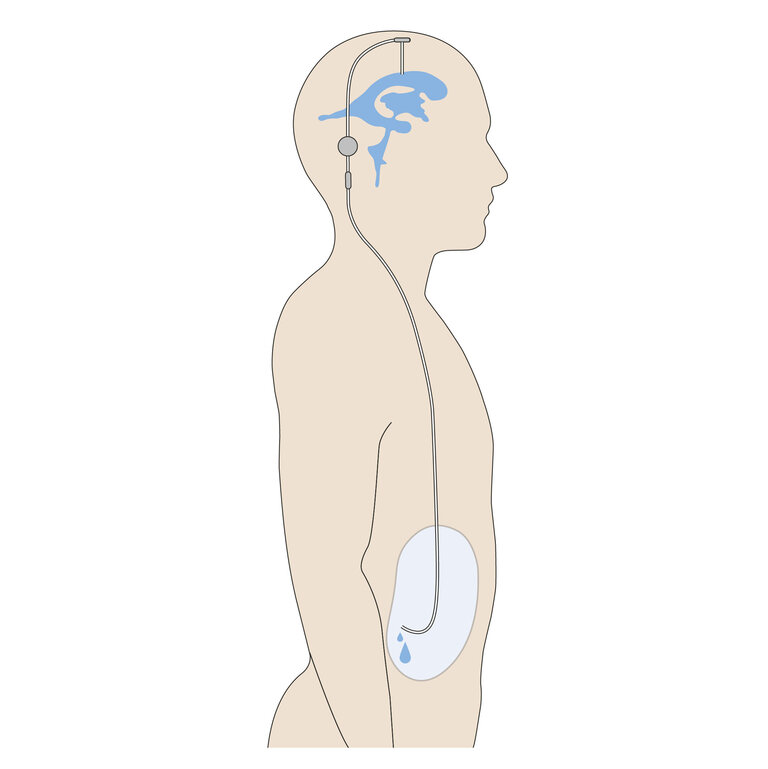
VP Shunt
ventrikuloperitoneal Drainage
There are cavities in the brain filled with cerebrospinal fluid: the ventricles. In a VP shunt operation, a catheter is placed in one of the ventricles and guided under the skin to the valve behind the ear. The valve determines when cerebrospinal fluid is drained. There are adjustable and non-adjustable valves that can be selected individually according to the patient's requirements. The peritoneal catheter is guided under the skin from the valve into the abdominal cavity (peritoneum). The catheter does not go into one of the organs but into the abdominal cavity in between. There the cerebrospinal fluid is absorbed and broken down by the body. As only a few millilitres are involved, this is easy for the body to cope with.
The name ‘ventriculoperitoneal’ therefore describes the path of the cerebrospinal fluid: from the ventricle into the peritoneal space.
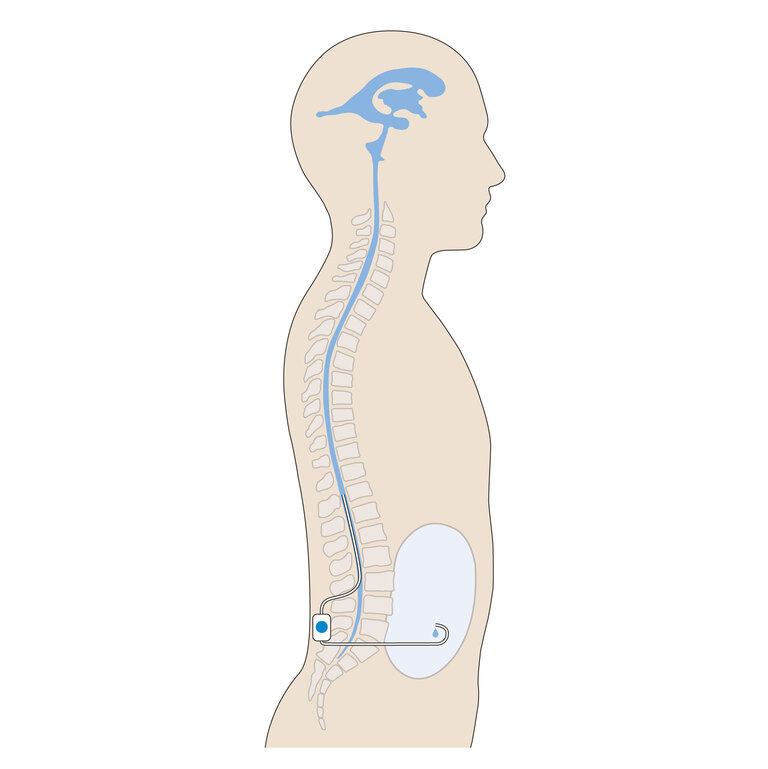
LP Shunt
lumboperitoneal Drainage
An LP shunt (lumboperitoneal shunt) drains the cerebrospinal fluid not from the brain, but from the lower part of the spinal canal - the so-called lumbar canal. The lumbar canal and the cerebrospinal fluid chambers (ventricles) in the brain are connected to each other. For this reason, drainage from the lumbar canal (LP shunt) has the same relieving effect as drainage directly from the ventricles (VP shunt).
A catheter is used to drain cerebrospinal fluid from the spinal canal. The catheter leads under the skin to a valve that regulates the drainage - here too, there are adjustable and non-adjustable valves. A peritoneal catheter leads from the valve into the abdominal cavity (peritoneum), where the drained cerebrospinal fluid is absorbed and broken down by the body.
The name ‘lumboperitoneal’ therefore describes the path of the cerebrospinal fluid: from the lumbar canal into the peritoneal space.

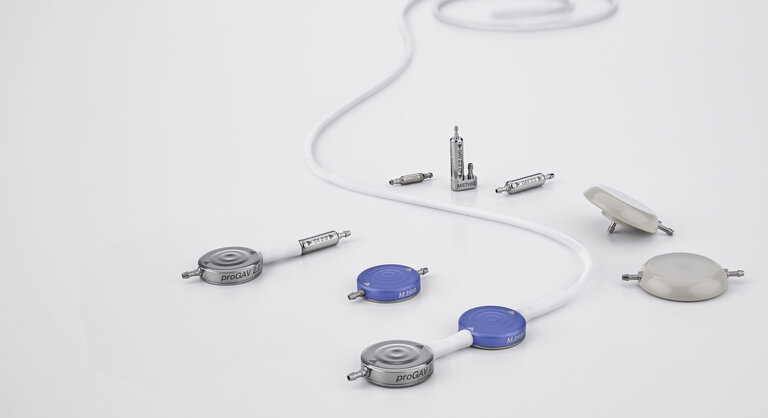
Shuntsystems FAQ
ANSWERS TO FREQUENTLY ASKED QUESTIONS
A shunt system is a medical device used to treat hydrocephalus by draining excess cerebrospinal fluid (CSF) from the brain to another part of the body, such as the abdomen, where it can be absorbed.
A shunt system works by diverting excess cerebrospinal fluid through a catheter and valve system. The valve regulates the flow to maintain stable intracranial pressure and prevent over- or under-drainage.
The most common types of shunt systems for hydrocephalus are ventriculoperitoneal (VP) shunts, ventriculoatrial (VA) shunts, and lumboperitoneal (LP) shunts. They differ in where the cerebrospinal fluid is drained in the body.
A programmable shunt is a type of hydrocephalus shunt that allows the opening pressure to be adjusted non-invasively using an external device. This enables physicians to optimize cerebrospinal fluid drainage without additional surgery.

![[Translate to English:]](/fileadmin/_processed_/d/b/csm_MIETHKE_myhcandme_Slider_36e844cb46.png "[Translate to English:]")

DO YOU HAVE ANY QUESTIONS ABOUT THE PRODUCT?
WE ARE THERE FOR YOU









OUR PARTNERSHIP
WITH B. BRAUN
B. Braun and MIETHKE - Together for a better life with hydrocephalus
We have a long and intensive partnership with B. Braun in the field of neurosurgery. We are driven by a common vision: to improve the lives of hydrocephalus patients around the world with innovative solutions.
Our partnership is an exciting combination of B. Braun's many years of expertise as one of the world's leading medical device and pharmaceutical companies and our agility as an innovative company and technology leader in gravitation-based shunt technology.
Our Strong Partner in Neurosurgery: