




Treatment of Normal Pressure Hydrocephalus (NPH)
The treatment and development of normal pressure hydrocephalus (NPH) varies from person to person. Although NPH is considered incurable, implanting a shunt system can significantly improve typical symptoms such as an unsteady gait, cognitive impairment and incontinence.1
Many patients ask themselves: What is the life expectancy of someone with NPH? There is no general answer to this question, as the prognosis depends on many factors, including those unrelated to NPH itself. However, studies clearly show that the earlier NPH is diagnosed and treated, the greater the chance of improving symptoms, and thus quality of life.2
How is NPH treated?
The standard treatment involves implanting a shunt system to drain excess cerebrospinal fluid. There are two types of shunt:
- VP‑Shunts (ventriculo-peritoneal): drainage from the ventricles of the brain into the abdominal cavity.
- LP‑Shunts (lumbo-peritoneal): drainage from the lumbar canal, which is connected to the ventricles.
VP shunts are most commonly used in Europe and North America, while LP shunts are primarily used in Japan.3,4 The most appropriate method should be decided on a case-by-case basis for each patient.
Although there have been repeated calls for non-surgical treatments for normal pressure hydrocephalus (NPH), to date there is no suitable alternative to shunt implantation.

The following factors are crucial for successful treatment:
- Severity of NPH symptoms
- Results of functional tests (e.g., spinal tap)
- Accompanying neurological disorders
In general, the earlier NPH is diagnosed, the greater the likelihood of successful treatment.2 That is why early diagnosis is very important.
Follow-up Care
The recovery period after surgery, especially for older patients, is hard to predict. However, physiotherapy mobilization often begins the day after surgery. A few days later, the shunt is usually examined with a CT or MRI scan. Patients are usually discharged after four to seven days.
Any fever during the first few weeks after surgery should be evaluated by a doctor, as it may indicate an infection.
Regular medical checkups are important to detect possible long-term effects or functional disorders early, such as blockage of individual shunt components. Although shunt implantation is very effective, problems may still occur. These problems may also be related to other existing neurological conditions.
Valves
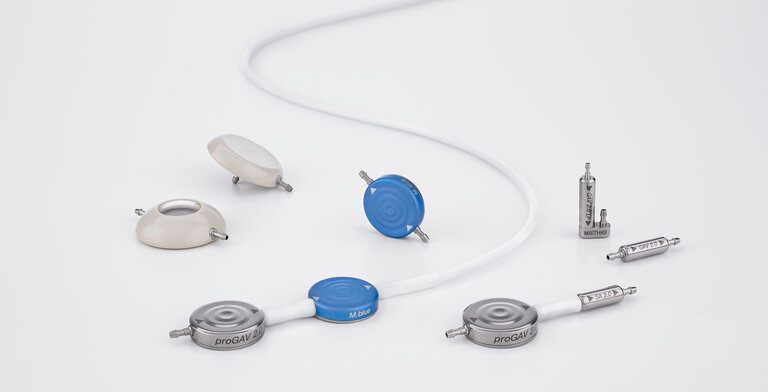
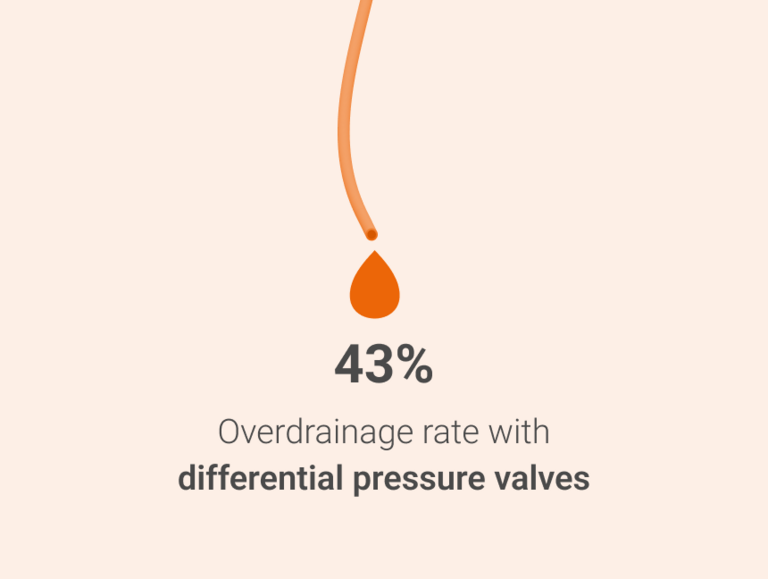
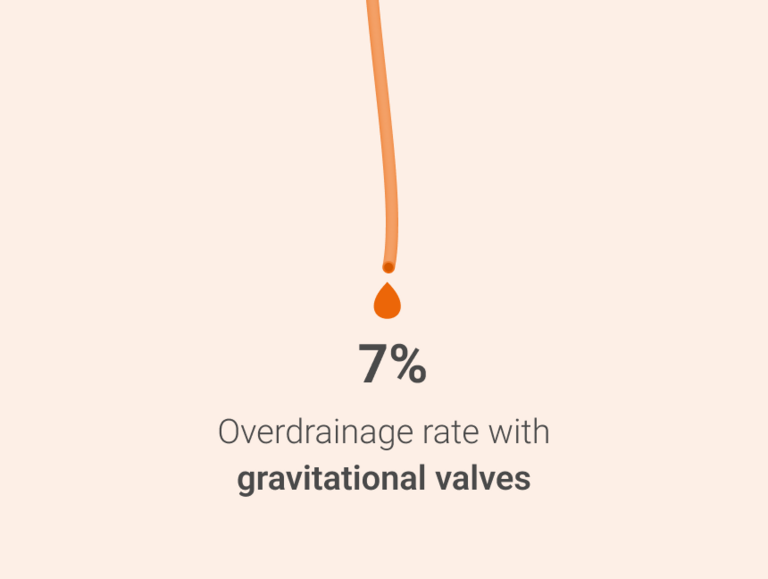
The valve is the heart of the drainage system; it controls the amount of cerebrospinal fluid drained. It opens automatically when a certain pressure in the brain is exceeded, allowing cerebrospinal fluid to drain until the pressure falls under that level again. Gravitational valves can significantly reduce the likelihood of overdrainage complications.5
Reservoir
A reservoir enables, for example, the removal of cerebrospinal fluid, pressure measurements, or functional checks of the system.
Gravitational-Technology
MIETHKE gravity valves consist of two valve units. In addition to accounting for intracranial pressure, they also consider the patient's position and the resulting pressure difference.
When lying down:
Drainage is controlled exclusively by the differential pressure unit.
When sitting or standing:
Drainage is controlled by the interaction of the gravity and differential pressure units. The difference in height between the head and the abdominal cavity creates hydrostatic pressure, which could lead to overdrainage of cerebrospinal fluid without a higher opening pressure. Therefore, the gravity unit automatically increases the opening pressure as soon as patients sit up.
Adjustable Gravitational Valves
As people age, their mobility and activity patterns often change, and adjustable gravitational valves offer flexibility. Doctors can easily adjust the opening pressure without further surgery.
The latest valve generations feature an active lock mechanism. This prevents the set opening pressure from being accidentally adjusted by external magnetic fields, such as those from by smartphones, headphones, or other everyday magnets.

We Understand the Gravity of the Situation
We believe that responsibility, precision and empathy are all connected. This belief is the reason behind every technical solution we develop. This attitude is reflected in our work every single day.
We develop innovative solutions for people with hydrocephalus, based on our deep understanding of the challenges they face and the requirements of clinical care. Through close partnerships with physicians and the use of precise gravitational technology, we are striving to make treatment safer, more reliable and more successful in the long term.
Our Strong Partner in Neurosurgery:

References
1. Kuser F, Dias SF, Stieglitz LH. Long-Term Follow-up in Idiopathic Normal Pressure Hydrocephalus-Towards a more Comprehensive Disease Outcome. (2025) World neurosurgery, 204, 124532. https://doi.org/10.1016/j.wneu.2025.124532
2. Andrén K, Wikkelsø C, Hellström P, et al. Early shunt surgery improves survival in idiopathic normal pressure hydrocephalus. (2021) European journal of neurology, 28(4), 1153–1159. https://doi.org/10.1111/ene.14671
3. Luciano MG, Williams MA, Hamilton MG, et al. PENS Trial Investigators and the Adult Hydrocephalus Clinical Research Network. A Randomized Trial of Shunting for Idiopathic Normal-Pressure Hydrocephalus. (2025) The New England journal of medicine, 393(22), 2198–2209. https://doi.org/10.1056/NEJMoa2503109
4. Kazui H, Miyajima M, Mori E, Ishikawa M, & SINPHONI-2 Investigators Lumboperitoneal shunt surgery for idiopathic normal pressure hydrocephalus (SINPHONI-2): an open-label randomised trial. (2015) The Lancet. Neurology, 14(6), 585–594. https://doi.org/10.1016/S1474-4422(15)00046-0
5. Lemcke J, Meier U, Müller C, et al. Safety and efficacy of gravitational shunt valves in patients with idiopathic normal pressure hydrocephalus: a pragmatic, randomised, open label, multicentre trial (SVASONA). (2013) Journal of neurology, neurosurgery, and psychiatry, 84(8), 850–857. https://doi.org/10.1136/jnnp-2012-303936